Why Clinical Reporting Needs a Centralized Platform
Clinical reporting has never been more complex. As studies grow in scale and sophistication, the number of tools, vendors, and workflows involved has grown right alongside them. What was once manageable has become a maze of multiple systems, multiple logins, and multiple versions of the truth.
The result is something every sponsor and CRO feels daily: disconnected metadata, inconsistent outputs, redundant work, and slow, risk-prone handoffs. These aren’t just operational headaches; they’re structural barriers to speed, quality, and compliance prone handoffs.
Across the industry, a shift is underway. Teams are recognizing that fragmentation isn’t sustainable, and that centralization isn’t just a technical preference, but an operational imperative.
Moving From Patchwork to Platform Thinking
The future of clinical reporting lies in unified ecosystems, not stitched-together tool chains.
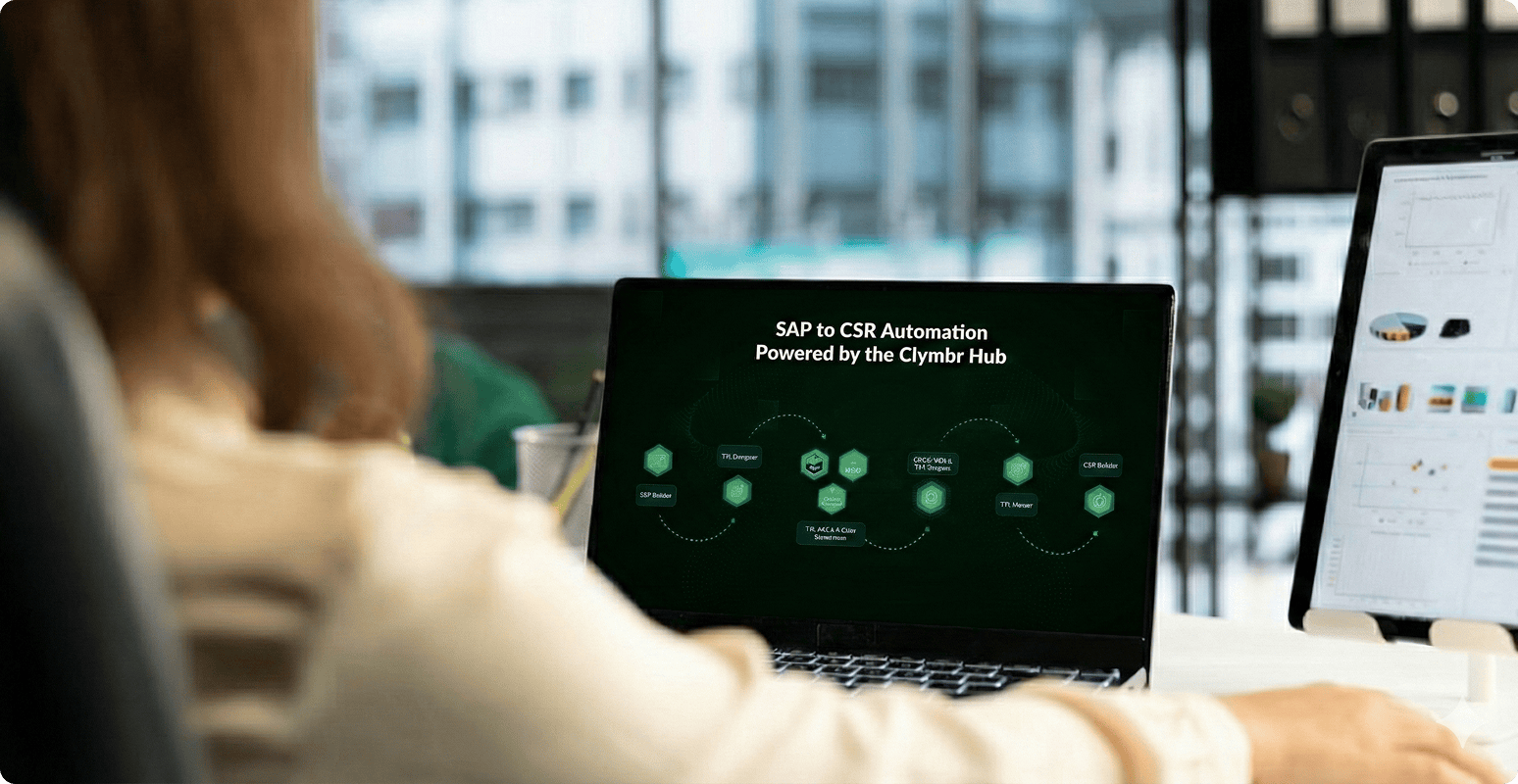
Bringing SAP development, TFL specification, automated code generation, results review, and CSR drafting into a single governed environment creates something powerful: a true end-to-end workflow anchored by one metadata backbone. When every step speaks the same language, the entire process becomes more predictable, more traceable, and far easier to govern.
This isn’t about replacing tools for the sake of consolidation. It’s about creating a coherent system where each component reinforces the others.
One Login, One Source of Truth
When teams operate across multiple systems, inefficiency becomes baked into the process. Manual handoffs, duplicate data entry, and endless access requests aren’t just nuisances—they introduce risk to your final outputs.
A centralized platform model removes that friction. With one enterprise environment, governance strengthens naturally. Data flows cleanly. Teams spend less time navigating systems and more time delivering insights.
Traceability as a First-Class Citizen
Traceability shouldn’t be a forensic exercise. It should be inherent.
When every module draws from the same metadata foundation, lineage becomes automatic—from SAP to TFL metadata to code, ARD, outputs, and ultimately the CSR. That continuity is what enables true reproducibility across studies, partners, and reporting cycles.
In a world where regulators expect clarity and sponsors expect consistency, built-in traceability is no longer optional.
Efficiency That Compounds
Fragmented workflows slow everything down. Re-entering metadata, reconciling mismatched versions, waiting on access, and stitching together outputs from disconnected systems all add drag.
Centralization eliminates that drag.
Teams move faster. Outputs get cleaner. Efficiency compounds across studies, portfolios, and partnerships. The gains aren’t incremental—they’re structural.
Built to Scale With You
Whether supporting a single study or an entire global portfolio, a centralized platform must scale without adding complexity. Enterprise grade hosting, automated upgrades, and a consistent user experience create stability. Highly configurable modules allow teams to tailor workflows, metadata structures, templates, and governance rules to their exact standards. Not the other way around.
Scalability isn’t just about size; it’s about adaptability.
Security and Compliance at the Core
In regulated environments, security and compliance can’t be bolted on—they must be foundational.
A modern clinical reporting platform should operate within a governed, audit-ready framework that supports GxP expectations and 21 CFR Part 11 requirements. Immutable audit logs, role-based access controls, single sign-on, encrypted data flows, and environment isolation all contribute to a security posture that protects sensitive information without slowing teams down.
Compliance becomes a natural outcome of the system, not an after-the-fact effort.
The Path Forward
The industry is moving toward centralization because the complexity of modern clinical reporting demands it. Fragmentation has reached its limit. Efficiency, traceability, and compliance now depend on unified, metadata-driven ecosystems that scale with the needs of sponsors and partners.
This shift isn’t about adopting a new tool: it’s about rethinking the foundation of how clinical reporting gets done.
Clymb Clinical Announces the Release of the Clymbr Hub
Director of Operations & Business Development
Latest Blogs
By Tawanna Childs
June 25, 2026
Clymbing Higher
From Midwest Roots to AI-Driven Biotech: Why I Moved to Boston.
I always envisioned trading in the Midwest for endless sunshine, crystal beaches, and tropical blooms. Somehow, my directionally illiterate self-ended up in the East Coast-where winters drag on, the days are shorter, traffic always wins and you quickly begin questioning your life choices.
By Tanaya Kondejkar
June 12, 2026
Beyond the Prompt: AI in Biostatistics, Statistical Programming and Medical Writing Workflow
We are living through a revolution where AI is reshaping how all industries operate. The clinical trial domain is one of the most complex industries but AI is very quickly transforming how the reporting side of it works. Clinical workflows follow strict regulatory standards. As someone building AI systems in this space, I’ve found that […]
By Bhavin Busa
May 21, 2026
AI Pulse: Taking the Industry’s Temperature on GenAI in Statistical Programming
AI Pulse was one of the most talked-about sessions at PHUSE US Connect 2026. Moderated by Bhavin Busa, the session brought together 75+ statistical programming professionals for a candid, anonymous look at where the industry actually stands on GenAI adoption. The results may surprise you...
By Shivani Gupta
April 16, 2026
Turbo TFLs: AI as our Sous-Chef
These days everyone wants to add a little AI tadka* into their daily work, and at my job, we’re no different. Just a few months ago, what I now lovingly call “the stone age”, we were still making Excel sheets, listing out program names, hunting for unique and duplicates, and building our TFL lists one […]
By Navin Dedhia
April 8, 2026
AI Isn’t Replacing Clinical Programmers – It’s Redefining the Role
There’s growing noise in clinical programming circles. Questions like “Will AI replace clinical programmers?” or “Will R automation eliminate manual TFL programming?” are becoming more common. But these questions miss the point.
